On Wednesday, New Mexico Gov. Michelle Lujan Grisham announced that her state will participate in the new federal scholarship tax credit beginning in 2027, becoming the third Democratic governor to embrace the program, following Colorado Gov. Jared Polis and New York Gov. Kathy Hochul.
The announcement comes just a day after elections that could reshape the future of school choice in several states—including participation in the federal tax credit. But the biggest implications may not come until 2028.
Here’s why: Under Treasury’s regulations, states must submit an initial advance election to participate by January 1, 2027, and then perfect that election by submitting a certified list of scholarship-granting organizations (SGOs) to the IRS by February 15. Treasury notes that states can, in effect, opt out by failing to perfect their advance election, but that completed elections cannot be revoked for that calendar year. Outgoing governors can therefore complete both steps before leaving office, securing participation for 2027. Because states must make a new election annually, 2028 provides another opportunity to reconsider participation.
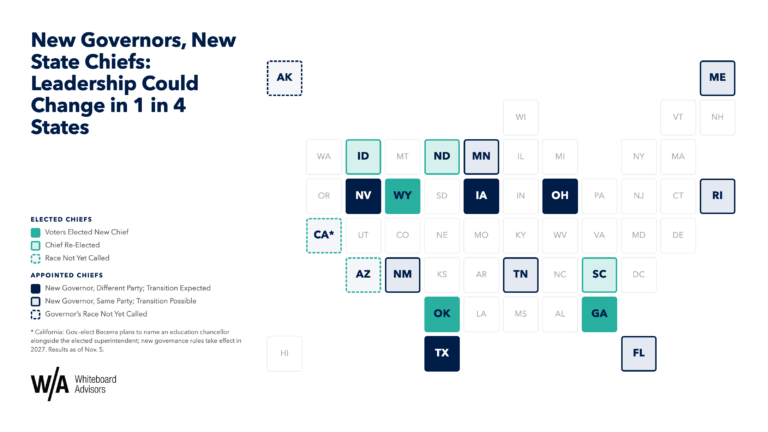
Tuesday’s elections put new Democratic governors in charge of six states that have already opted into the federal program: Colorado (Phil Weiser), Georgia (Keisha Lance Bottoms), Iowa (Rob Sand), Nevada (Aaron Ford), Ohio (Amy Acton), and Texas (Gina Hinojosa). Weiser has explicitly said he would opt Colorado out, while Ford has expressed concerns about the program and said he is examining the legality of Nevada’s participation. The other governors-elect have not clearly established positions on the federal tax credit, although several, including Sand and Hinojosa, have criticized their states’ existing private school choice programs.
Meanwhile, Democratic victories in Michigan, Arizona, Wisconsin, Minnesota, and Pennsylvania mean those states will remain under Democratic leadership, though participation decisions are far from settled.
Last month, five Democratic governors wrote to Treasury seeking additional clarification on the regulations released in early October, particularly around how scholarships could support public school students, state oversight, and program costs. New Mexico’s announcement, which emphasized opportunities to support public school tutoring, literacy initiatives, and after-school programs, illustrates how those considerations could shape governors’ decisions.
The implications extend beyond the federal program. As we noted in our post-election analysis, new Democratic governors will also inherit established state-level school choice programs, including ESAs in Georgia, Iowa, and Texas and Ohio’s voucher programs. Once programs are operating and families are enrolled, unwinding them becomes politically and practically challenging. While some governors-elect, including Hinojosa in Texas, have called for repeal, we expect much of the near-term debate to center on funding, accountability, eligibility, and oversight.
The bottom line: The first year of the federal scholarship tax credit will be closely watched, particularly whether it delivers meaningful benefits for public school students. Those early results could play an important role in shaping governors’ decisions for 2028 and beyond.