
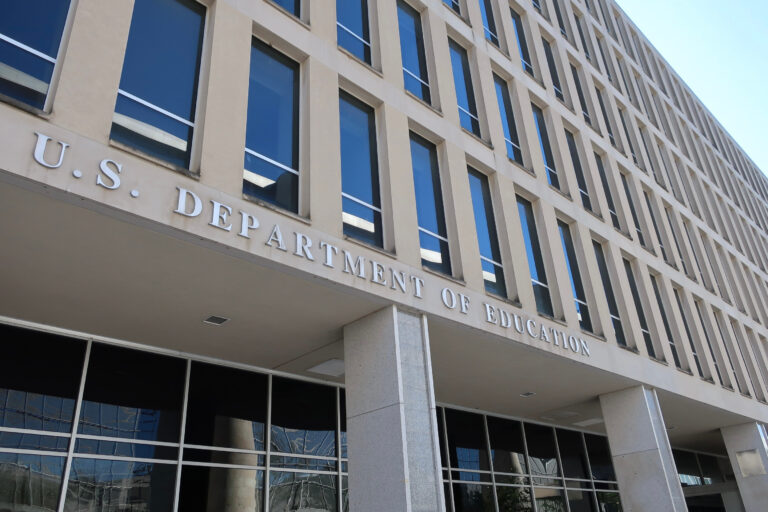
The Trump administration is advancing plans to shift federal oversight of special education away from the U.S. Department of Education—potentially to the Department of Health and Human Services (HHS)—as part of its broader effort to dismantle the department and return authority to the states. [USA Today]
Driving the news: Education Secretary Linda McMahon has made clear that her goal is to “put herself out of a job by shutting down the Department of Education,” a spokesperson told multiple outlets this week.
Deputy Assistant Secretary for Communications Madi Biedermann confirmed the Department is “exploring additional partnerships” with other federal agencies to manage special education programs—though no formal agreement has been signed. [The New York Times, subscription model; K-12 Dive]
- The discussions come just days after layoffs at the department during the ongoing government shutdown, which eliminated roughly 121 employees in the Office of Special Education and Rehabilitative Services (OSERS) and a total of 465 employees across the agency.
- Those firings are part of a larger downsizing effort: the Department now employs about half the staff it had at the start of the year.
- A federal judge has since ordered the administration to pause mass firings of federal workers during the shutdown.
Why it Matters
The proposal could shift oversight of the $15 billion Individuals with Disabilities Education Act (IDEA) program. Such a move would not be entirely unprecedented: recall that education activities fell under the control of the Department of Health, Education and Welfare prior to the creation of the U.S. Department of Education. The statutes that have evolved into the modern day IDEA were initially passed in 1975, five years before the Department of Education came into existence. [The Washington Post, subscription model]
Between the Lines
Secretary McMahon and President Trump have both named HHS—led by Robert F. Kennedy Jr.—as a potential home for special education oversight. Kennedy has said his agency is “fully prepared” to take on responsibility for individuals with special needs.
The Bottom Line
Changes to the administration of the federal law, including efforts to “return education to the states,” would not necessarily reduce local funding or erode federal statutory requirements that schools provide individualized support and services for students with disabilities.
This article is sourced from Whiteboard Notes, our weekly newsletter of the latest education policy and industry news read by thousands of education leaders, investors, grantmakers, and entrepreneurs. Subscribe here.