
States are tapping into longstanding flexibility under the Every Student Succeeds Act (ESSA) and testing the bounds with which the Department of Education (ED) will approve waiver requests related to assessments and funding.
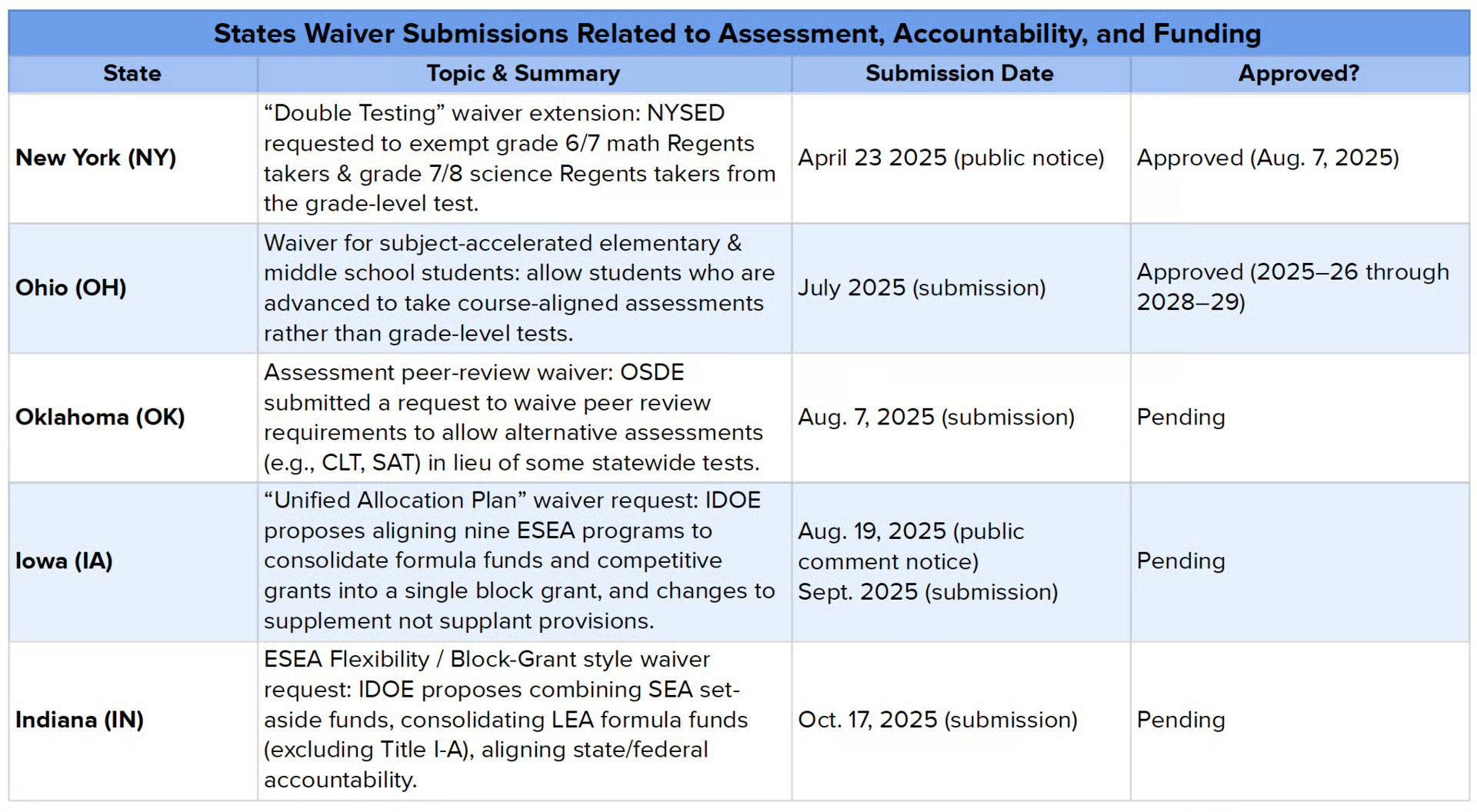
To date, 45 states, the District of Columbia, Puerto Rico and the Bureau of Indian Education have submitted requests for ESEA flexibility. W/A Research dug into the requests that impact state assessment, accountability, and funding.
ED issued a “Dear Colleague” letter on July 29, 2025 encouraging states to request waivers under section 8401 of ESEA. In that letter, ED highlighted potential flexibility around: (1) assessment and accountability requirements, (2) funding and flexibility, and (3) other compliance burdens. The letter also emphasized the provisions that cannot be waived, including those related to the allocation of funds, maintenance of effort, and civil rights provisions.
As the government shutdown nears its fourth week, there is continued uncertainty and limitations in ED’s capacity to review waivers, meaning that even submitted waiver requests are likely to sit pending longer than normal. ED may take up to 120 days to respond to a waiver request.
Focus State: Indiana
- On July 24, 2025, the Indiana Department of Education (IDOE) announced it would be seeking a waiver from ED aimed at reducing “bureaucratic compliance” and giving local schools more flexibility. It invited the public to comment on the proposed flexibility request.
- On October 17, 2025, the state formally submitted its waiver request to ED to pilot a consolidated block grant of ESEA programs (Title I-Title IV) and use Indiana’s state accountability model to satisfy both federal and state accountability requirements (A-F system is in development), and streamline reporting and monitoring of local districts.
- Gov. Mike Braun framed the waiver as part of a broader effort to “cut red tape” and “return education to the states,” aligning with the Trump administration’s stated goal of expanding state discretion over federal funds. If approved, Indiana would become the first state in nearly a decade to pilot a block-grant-style consolidation of ESEA programs, setting a potential precedent for other states seeking greater fiscal flexibility.
- Read more: Chalkbeat Indiana Coverage (September, 2025)
Why it Matters
- ED’s waiver authority under ESEA is relatively broad (see section 8401). States must demonstrate how waivers will “advance student academic achievement” while also maintaining transparency and support for the same student groups served by the programs being waived.
- For Indiana’s case and similar ones, the greatest policy risk/attention is around: (a) block-granting federal funds and reducing program-specific restrictions (which raises equity and targeting questions) and (b) using state accountability models in place of federal systems (which raises transparency and comparability questions).
- Advocacy groups, including The Education Trust, National Urban League, and others, have raised concerns about recent state ESEA waiver proposals—warning that approval could risk weakening transparency and equity protections for historically underserved students.
- Because the government shutdown has impacted staffing/processing, states should expect longer review times. States waiting on ED approvals should monitor whether ED issues delays, requests for revisions, or outright denials.
- Given the administration’s desire to give as much flexibility to states as possible, we expect more states to submit waiver requests in late 2025 and early 2026—so the list will grow.
This article is sourced from Whiteboard Notes, our weekly newsletter of the latest education policy and industry news read by thousands of education leaders, investors, grantmakers, and entrepreneurs. Subscribe here.