
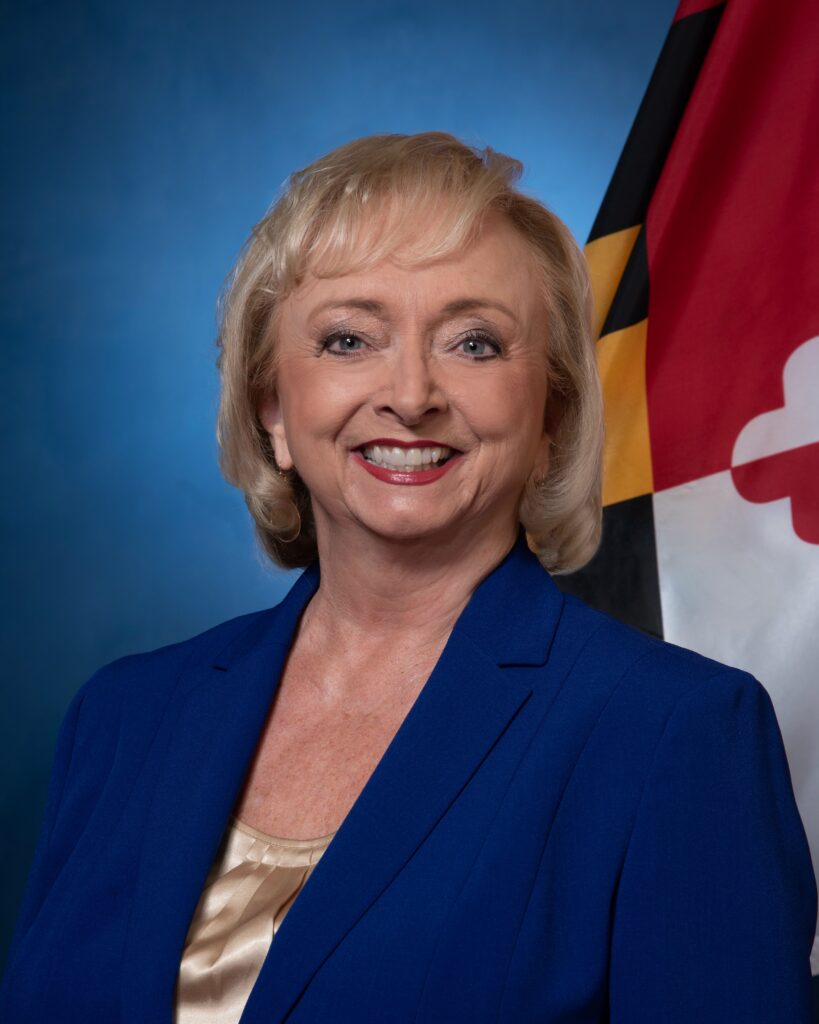
Maryland’s 4th grade reading ranking jumped 20 spots on NAEP in two years. But according to Maryland State Superintendent Carey Wright, the real work is just getting started.
Wright, best known for her role in ushering in the “Mississippi Miracle,” came out of retirement because she saw potential in her home state, and knew Maryland’s children deserved a system aligned around their success.
In an exclusive for W/A Notes, Superintendent Carey Wright discussed the Blueprint for Maryland’s Future, the state’s new assessment system, and what it looks like to build an education system that prioritizes student achievement.
Q: You had one of the most celebrated leadership runs in American public education, retired, and came home to Maryland. Then you got the call to be Maryland’s next state superintendent. What made you say yes?
Wright: Maryland gave me my start. This was my opportunity to give back and to help restore Maryland as one of the top-performing education systems in the nation. When the call came, I felt the same conviction I have felt at every major turn in my career: all children can learn, and all children deserve our very best.
I have always gone where I felt I could make a meaningful difference for students. Maryland is my home. I grew up here. I built my early career here. And when I looked at the data, it was clear that our students were not achieving at the levels Maryland has historically expected of itself. I knew we could do better, and I knew the work we had done in Mississippi. Updating standards, investing in high-quality professional learning, strengthening our assessments, and building a culture of high expectations was not unique to one state.
So I said yes because I knew Maryland’s children deserved a system aligned around their success. And I said yes because I believe in Maryland’s educators. When you put the right supports, structures, and expectations in place, children will rise.
Q: You oversaw some of the fastest academic improvement in the country in Mississippi, a feat known as the “Mississippi Miracle.” When you look at Maryland’s 890,000 students today, where do you see the biggest opportunities to move the needle? When do you expect to see results, and what are your indicators for success?
Wright: The biggest opportunity is alignment—ensuring that our policies, our instructional materials, our assessments, and our accountability system are all pulling in the same direction. That is how we made progress in Mississippi, and that is what we are building in Maryland.
We started by updating our PreK-3 Literacy Policy, developing a statewide Mathematics Policy, launching an Adolescent Literacy Policy, and investing in instructional coaching. We aligned our standards and set clear expectations for high-quality instruction grounded in the science of reading and strong math practices. We have also taken important steps to strengthen our accountability system so it reflects what we value: student learning, growth, and equitable access to high-quality instruction. We are now finalizing a new statewide assessment that measures the skills we value and provides meaningful information to educators.
We are already seeing results. The most recent NAEP administration showed Maryland’s fourth-grade reading ranking jump from 40th to 20th in just two years. That is not the finish line, but it shows we are on the right track.
Our indicators for success remain steady: student proficiency and growth on statewide assessments, NAEP performance, early literacy and math benchmarks, high-quality instructional materials in every classroom, strong implementation of coaching and professional learning, and improvements in school climate and student engagement
This is long-term work. It is not a miracle. It is a marathon of strong policy, strong practice, and a belief that all children can achieve at the highest levels. And Maryland’s children are already showing what is possible.
Q: Maryland is mid-implementation of the Blueprint for Maryland’s Future, an ambitious state education reform package that was passed by the Maryland General Assembly in 2021. You’ve said publicly that you believe it can restore Maryland as a top-10 education state in the nation. Where is Maryland already leading, and what’s the biggest barrier standing between where Maryland is today and that goal?
Wright: Maryland is leading in its commitment to early childhood education and its investment in high-quality instructional materials and professional learning. Our statewide literacy and math reforms are grounded in clear standards, evidence-based practices, strong coaching, and aligned materials, and have established a solid instructional foundation across all grade levels. The Blueprint gives us a strong policy structure, especially in early learning, college and career readiness, and educator compensation. Those are powerful levers.
Where the challenge lies is in coherence and urgency. The Blueprint is ambitious—and ambition is good—but when a system is working on many priorities at once, the work can become fragmented. My focus has been on building a strong foundation with clear standards, aligned assessments, effective coaching, and a strong accountability system that allows the rest of the Blueprint to take hold.
The biggest obstacle is time and belief. Systems do not change overnight, and people can lose momentum when results are not immediate. Once the system aligns around student achievement and people see real progress, the momentum becomes unstoppable.
Q: You are a fierce advocate for assessment reform, one of the hottest debates in the education industry today, and set to launch the replacement to the Maryland Comprehensive Assessment Program this coming school year. Tell me about Maryland’s new assessment program—how is it better for students and educators?
Wright: Our new assessment system is built to support learning, not just measure it. It will give teachers real-time information they can use to adjust instruction and support individual student needs.
We have aligned the assessment to our higher academic standards so that what teachers teach and what students are asked to demonstrate are finally connected. The new assessments are designed to be clearer, more engaging for students, and more reflective of the knowledge and skills that matter for long-term success. Equally important, the system emphasizes the growth of all students, with a particular focus on accelerating the progress of the bottom third of learners—students who have the most to gain from strong, targeted instruction, and responsive support.
Just as importantly, the assessment will reduce unnecessary testing time and provide better, more actionable data for educators and families.
Assessments should never be a compliance exercise. They should be a tool that helps teachers accelerate learning. This new system is a major step forward for Maryland.
Q: You’ve made improving Maryland’s school accountability system a priority. How are you approaching these changes?
Wright: Accountability is about transparency, fairness, and focus. It should tell us whether students are learning, where they are growing, and where additional support is needed.
Maryland’s current accountability system is complex and heavily embedded in statute, which makes it difficult to adapt. That is why we worked with the Accountability Task Force and Accountability Advisory Committee, bringing together educators, district leaders, policymakers, and families to develop recommendations grounded in what actually drives improvement. This legislative session, we successfully secured a statutory change that gives us the flexibility needed to strengthen the system and ensure it better reflects student learning and school performance.
My approach has been consistent with what worked in Mississippi: Put student learning at the center, elevate growth as well as proficiency; ensure the system is simple, transparent, and actionable; engage stakeholders early and often, and advocate for the flexibility needed to refine the system as we learn.
Accountability should not be punitive; it should be a roadmap. When families, educators, and communities have clear information, they can support the work with urgency and purpose. That’s what we are building in Maryland.
This article is sourced from Whiteboard Notes, our weekly newsletter of the latest education policy and industry news read by thousands of education leaders, investors, grantmakers, and entrepreneurs. Subscribe here.