
The federal funding story has dominated headlines for the past year, including stories on delayed Title funding, block grant proposals, and moving programs to other agencies (to name a few). It deserves attention. But for most district leaders, the harder, slower-moving problem is making ends meet with declining budgets from state and local dollars spurred by low enrollment and high costs.
Enrollment Declines
Demographers have been sounding this alarm since at least 2014. Birth rates declined steadily after the Great Recession, and school-age populations were always going to follow. Most state funding systems knew this was coming. Many districts did too.
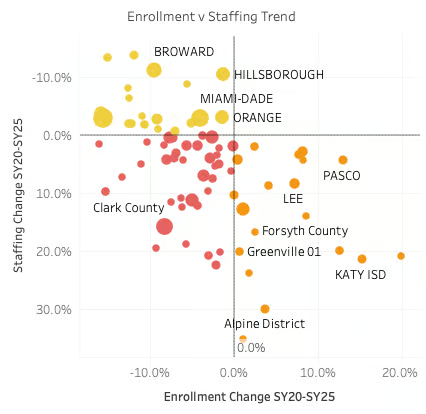
Yet, many agencies have been slow to respond and manage costs. One of the clearest indicators of fiscal distress is the gap between lost enrollment revenue and rising personnel costs. A Whiteboard Advisors analysis of NCES data comparing changes in staffing and enrollment shows that many of the largest agencies are losing revenue due to declining enrollments while increasing their personnel costs, putting them in a foreseeable predicament.
Then there’s the newcomer collapse. Miami-Dade typically enrolls around 15,000-20,000 first-time U.S. students in a given year. This year, it enrolled a few thousand—an estimated 85%+ drop. LAUSD has seen its newcomer population fall by more than 20% over two years. New York City is reporting similar pressures. These aren’t marginal shifts; newcomer students are part of the enrollment base that district budgets are built around.
The fiscal consequences are already arriving. Houston ISD is projecting $50-60 million in annual state funding losses if trends hold, and has already moved to mitigate these losses by cutting over 300 staff positions and is further recommending the closure of 12 schools.
Rising Costs on Every Line Item
Even districts maintaining enrollments are getting squeezed from other directions.
Diesel prices alone are forcing real-time budget revisions. Yakima, Washington paid $3.84 per gallon for diesel last school year. By late April, it was $6.30, putting the 16,000-student district $100,000 over budget on transportation. A recent survey of 188 district leaders found 40% have already adjusted bus routes; 12% have cut planned summer instruction. If prices hold, leaders are anticipating cuts to extracurriculars, facilities maintenance, and noninstructional staffing.
And while budgets tighten, the vendor pitches are accelerating. Chalkbeat’s Lily Altavena asked five superintendents to share every sales pitch that landed in their inboxes on a single day in March. The result—”transformative experiences,” “research-backed answers,” unsolicited calendar invites—is a vivid picture of an AI marketing arms race aimed squarely at leaders who don’t have money to spend.
The Federal Chapter Isn’t Closed
As we reported on in March, last year’s federal funding disruptions—the July 2025 formula freeze, the ESSER liquidation fight, the OMB grant pause—were destabilizing. Most of the dollars eventually came through, and Congress held the line on core formula funding in the FY2026 appropriations.
The next inflection point is July 1, 2026. If federal formula fund disbursements arrive on time, as expected, and districts can move forward with carry-over for remaining federal dollars into the fall, it will be a meaningful stabilizer heading into a difficult year.
The Can Has Run Out of Road
The average superintendent tenure is now below four years. That churn makes long-term decision-making harder and means district leaders often walk in the door facing a structural imbalance between declining revenue and rising costs. With limited time and resources to try and fix it.
This article is sourced from Whiteboard Notes, our weekly newsletter of the latest education policy and industry news read by thousands of education leaders, investors, grantmakers, and entrepreneurs. Subscribe here.