

A new PACE report is renewing debate about California’s TK-12 governance structure, highlighting longstanding tensions among the elected state superintendent, governor-appointed State Board of Education, and the governor.
The report argues that unclear roles and diffuse authority make it difficult to implement major initiatives—like Expanded Learning Opportunities Program (ELOP) and community schools—with consistency statewide. PACE offers several options, from clarifying responsibilities to consolidating authority or even shifting to an appointed state chief (which would require a constitutional amendment). [EdSource]
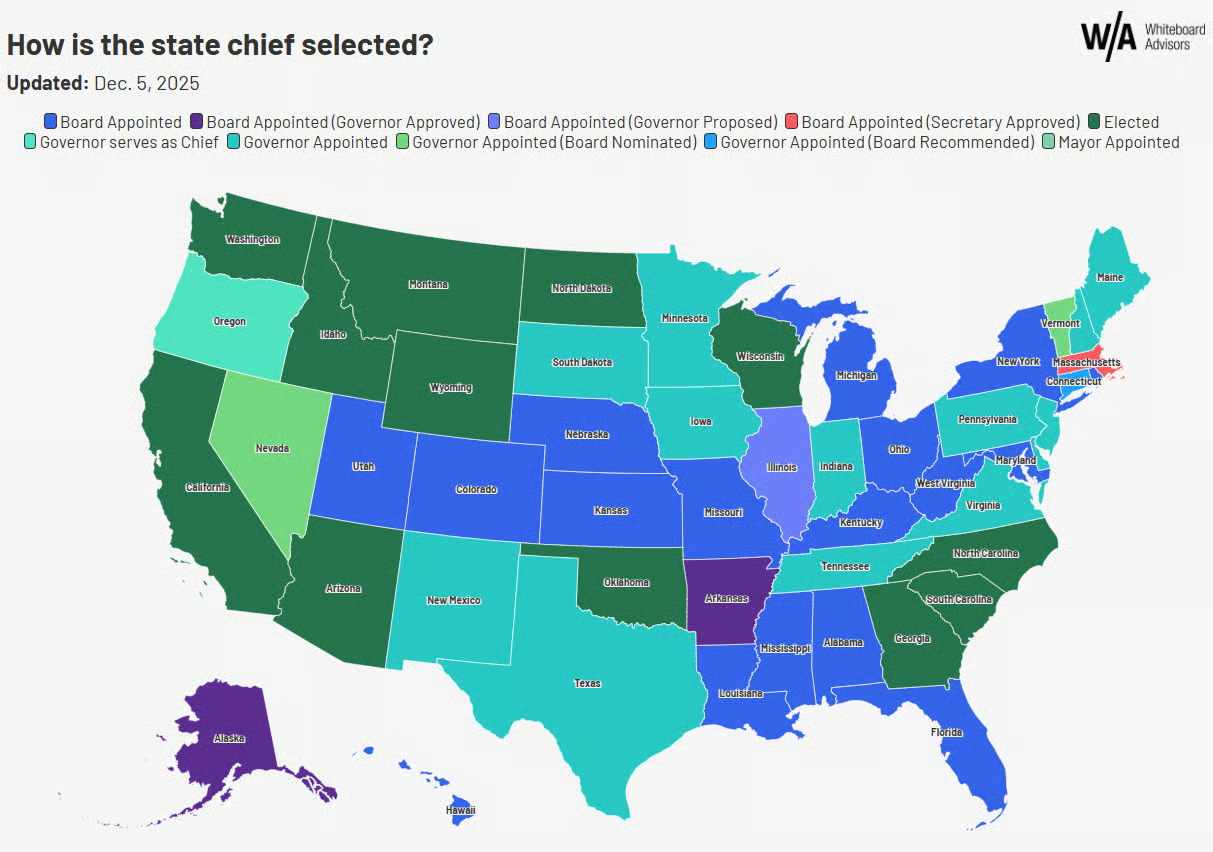
California is not alone: Indiana recently moved from an elected state chief to a governor-appointed secretary of education, and other states may look to governance changes as budget constraints, implementation challenges, and shifting political dynamics stir tensions between public officials and school leaders.
The map below demonstrates the differences in governance structures (elected chiefs, governor-appointed chiefs, board-appointed models, hybrid structures) across the country. Although there is nuance; even with the majority of states having their State Board appoint state chiefs, some of those boards are elected and some are appointed by governors.
We’ll continue tracking developments in California—and across states—as governance conversations gain momentum.