
After years of unsuccessful—and often bipartisan—policy proposals, Workforce Pell finally made it to the finish line as part of the One Big Beautiful Bill Act (OBBBA).
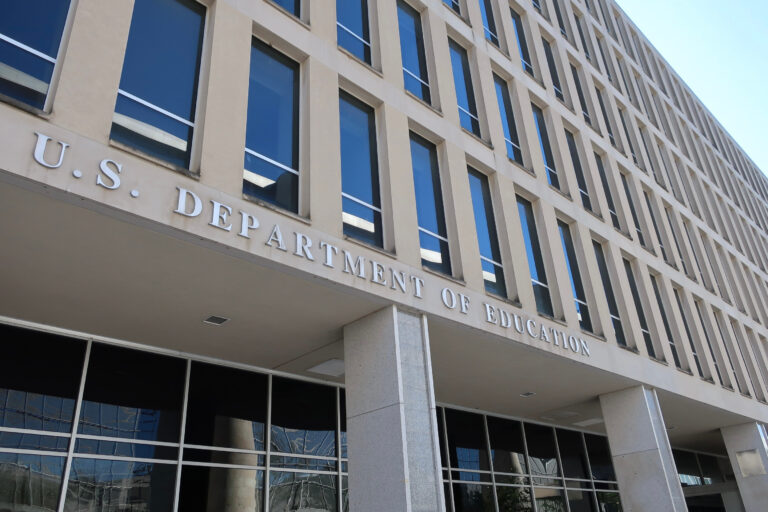
Last Friday, the U.S. Department of Education (ED)-convened negotiated rulemaking committee charged with crafting the rules that will govern this sweeping expansion of federal student aid reached consensus.
- ED will now move forward with implementing the program in order to meet the July 1, 2026 deadline prescribed by the OBBBA.
- While ED plans to have a process in place for determining what programs are eligible for Workforce Pell by July 1, the Department acknowledged that it will likely take time for states to approve eligible programs. ED is hopeful that programs will be “up and running and moving in 2026-27.”
What is Workforce Pell? Workforce Pell (AKA “Short-term Pell”) opens up Pell grant eligibility to students enrolled in 8-15 week long, workforce-aligned programs at accredited institutions (historically, only students in undergraduate programs longer than 15 weeks were eligible).
For the 2025-26 award year, the maximum Pell grant award is $7,395; however, students enrolled in Workforce Pell-eligible programs will likely receive a partial amount, depending on the length of the program. For more on program eligibility requirements, check out our “Workforce Pell” primer.
Where the Committee Landed
- The Compliance Burden will be on States. States—more specifically, governors—will be tasked with the lion’s share of the work when it comes to approving Workforce Pell programs, including calculating placement and graduation rates (what is now being referred to as the “70/70 test”).
- Occupation will Factor Into Job Placement Rates (Eventually). A major question going into the rulemaking was how ED would measure job placement (whether it would measure employment in any job or in a related occupation to the program). Initially, job placement rate will be calculated based on the percent of students employed during the second quarter after exiting the program. However, starting in 2028-29, the rate will include only students employed in an occupation related to the program or “comparable high-skill, high-wage, or in-demand occupation.”
- Limits on Outsourcing. As we noted last week, the proposed rules effectively prevent institutions from outsourcing more than 25% of programs to an “ineligible institution or organization.”
- This may come as a surprise to many, particularly from a pro-market, Republican administration. But concerns about quality and consumer protection were clearly paramount in the committee’s decision making, with ED noting in the draft rules they “are particularly concerned about such arrangements in light of the risk to both students and taxpayers.”
- As proposed the rules would, for example, bar an institution from acting as a “pass through” for an unaccredited provider, like a coding bootcamp or other training organization. Generally speaking, institutions can outsource between 25-50% of their other programs with accreditor approval. Workforce Pell appears to set a higher bar.
- Crossing State Lines. Because the law requires state-by-state approval in order to ensure alignment with workforce demands, online programs cannot be approved for Workforce Pell through the existing NC-SARA reciprocity structure. Based on concerns from negotiators about students that may need to cross state lines, ED incorporated language allowing the creation of bilateral agreements between states which could allow learners to access Workforce Pell programs in neighboring jurisdictions.
- Value Added Earnings. One of the more intriguing accountability measures established is a new federal run Value-added Earnings Metric (VAE) that would require programs to cap tuition and fees based on the difference between median earnings and 150% of the poverty line.
- The proposed rules clarify that VAE is intended to cap their maximum tuition; however, if a program continues charging more than the VAE after it was determined by the Secretary, they would become ineligible.
- Competency Heavy, but Time Still Matters. Because of the very specific language in law on the number of clock hours needed, the rules clarify that Direct Assessment Competency-based Education (which centers on outcomes rather than time) cannot be utilized to by Workforce Pell programs, which could otherwise enable learners to move more quickly through the program if they can demonstrate competence.
- Connection with Registered Apprenticeship. The proposed rules would enable related instruction to Registered Apprenticeships to count toward Workforce Pell.
- Stackability and Transferability Requirements. In addition to demonstrating that programs align with in-demand competencies and employer needs, institutions must create written policies to establish whether programs lead to credentials that are stackable, portable, and can be transferred into credit.
AHEAD Takes on Pell Eligibility for Students with Full Rides
- In addition to Workforce Pell, AHEAD was tasked with establishing rules for an OBBBA provision which would prohibit students who receive “full ride” college scholarships from receiving Pell grants.
- The new rules would prevent students from receiving Pell grants when their cost of attendance (COA) is already fully covered by non-federal sources (e.g., institutional athletic scholarships, state financial aid, or other private scholarships). Under the proposed rules, colleges must either return Pell grants or reduce the non-federal financial aid for students receiving funding in excess of their total COA.
What’s Next?
The AHEAD Committee rulemaking isn’t done yet
The committee will reconvene the week of January 5, 2026 to discuss regulations governing the “do no harm” requirement, which would mandate that degrees eligible for federal loans lead to earnings higher than the average of those without a degree.
- We are watching closely to see how these requirements may intersect with, change, or replace Biden-era Gainful Employment regulations.
Once that session is complete, ED will publish a draft set of new regulations, known as an Notice of Proposed Rulemaking (NPRM) for all issues discussed at both the December and January sessions.
- For regulations that achieve consensus during the course of negotiations (e.g., Workforce Pell), ED is required to publish and finalize a draft set of regulations that is substantively the same as the draft language agreed to during the negotiations.
- For regulations that don’t achieve consensus, ED is at liberty to draft the regulations in a way that it believes will lead to faithful implementation of the law.
After ED publishes the NPRM, the public will have at least 30 days to submit comments which ED must review. For regulations that the committee does come to consensus on, ED may further revise draft regulations based on public comments it receives as it deems necessary.
After reviewing and addressing public comments, ED will issue the regulations as final rules in the Federal Register. ED plans for the final rules to take effect on July 1, 2026, based on deadlines stipulated by the OBBBA.
Questions about Workforce Pell? Reach out to us.