
There’s nothing like a federal government shutdown to remind you why you love working with states. State policymakers have the ability to move far more quickly in response to classroom needs, including pivots when new research on instructional approaches comes to light.
In 20 years of work on state education policy, outside of the proliferation of computer science policy, the effort that I’ve seen scale the most rapidly is the science of reading (SOR) movement—which really took off (again) over the past five years.
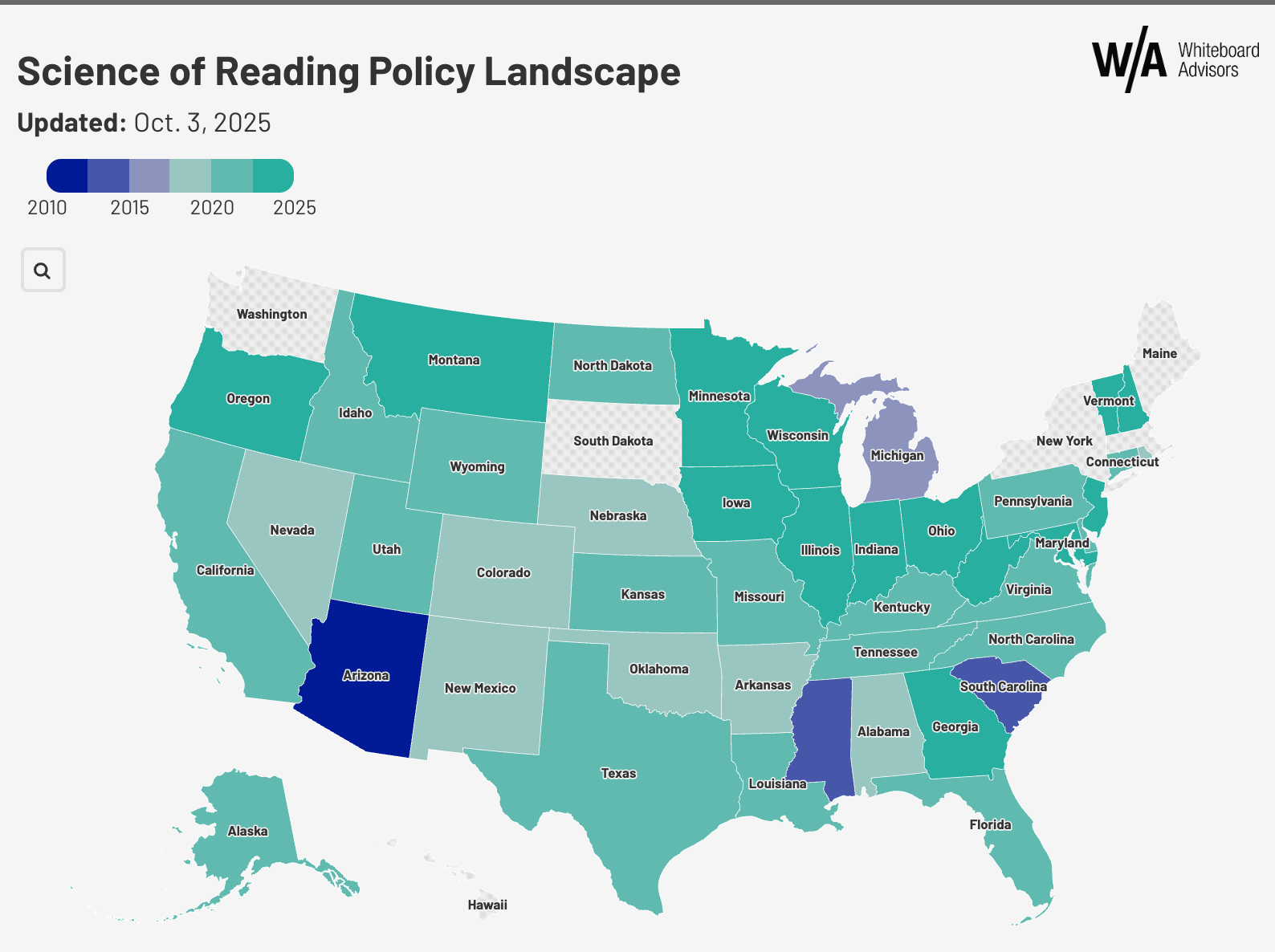
Check out our interactive Science of Reading Policy Landscape map.
To date, 44 states and Washington, D.C. have passed laws designed to strengthen literacy instruction—an extraordinary policy achievement more than two decades in the making, including California Gov. Gavin Newsom’s signing of A.B. 1454 this week to expand the state’s literacy efforts. The new legislation includes funding for paid professional development, strengthening administrator and reading specialist capacity, and supporting statewide adoption of evidence-aligned instructional materials. California passed its initial SOR law in 2021.
But as any educator or policymaker will tell you, passing a bill is just the beginning. The real work starts with implementation: ensuring that every educator has the training, tools, and ongoing support needed to make evidence-based reading instruction a daily reality in classrooms.
This past week, I had the privilege of seeing this shift up close in two very different states, Oklahoma and Delaware, that are both leaning into this next chapter:
- In Oklahoma, newly-appointed state superintendent Lindel Fields and the transition team appointed by Gov. Kevin Stitt have identified literacy as one of his top three priorities for the year, signaling the state’s commitment to translating its science of reading legislation into real, sustained change for students. The state is building the infrastructure to help districts turn policy into practice—investing in professional learning of evidence-based instruction, screening and intervention for students, and aligned materials.
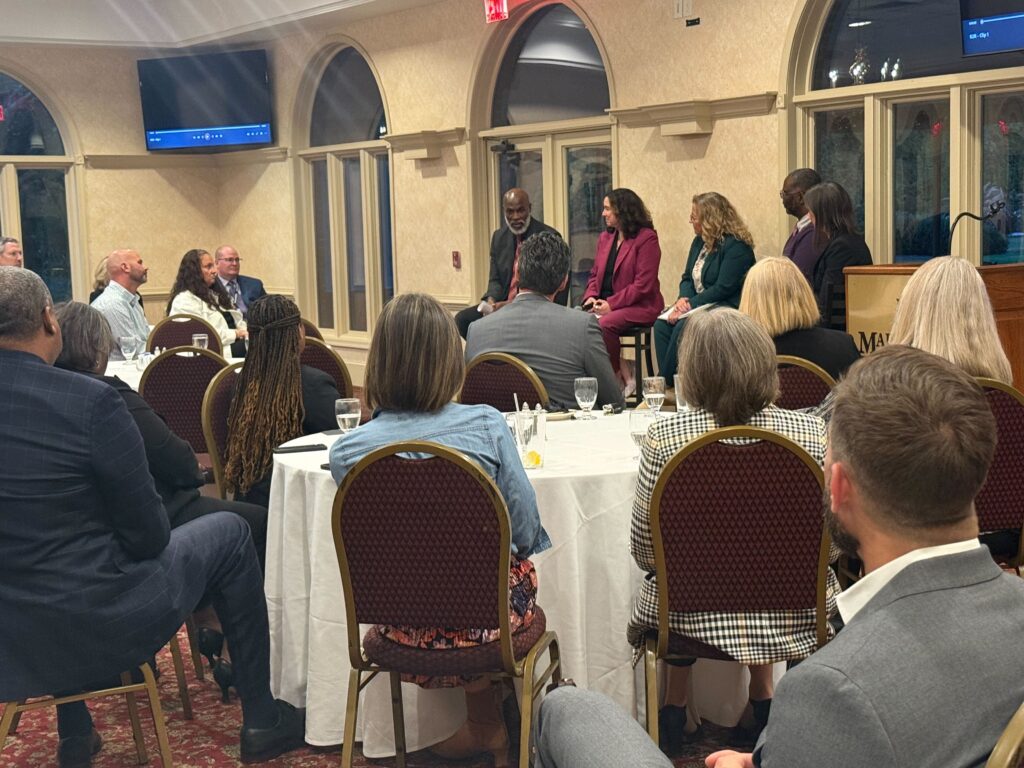
- In Delaware, I joined Secretary of Education Cindy Marten for an evening with superintendents and board members, which featured the Right to Read film and a conversation with district leaders who emphasized the importance of the “how” now that they’ve established the “why.” The discussion highlighted the concrete steps needed to ensure students are learning how to read and prepare for the road ahead as the state implements its 2022 SOR legislation and new funding championed by Gov. Matt Meyer and the legislature this past session. The event underscored what we’re hearing across the country: success hinges on sustained collaboration between state leaders, higher education, and the classroom educators doing the work every day. Delaware has also announced a new bridge to practice grant to provide direct support and training to early literacy educators.
What’s striking—and encouraging—is that two states with very different political and cultural contexts are converging on the same priority: ensuring that teachers have the knowledge and support they need to deliver high-quality literacy instruction. As education policy advocates, we must recognize that results from these shifts don’t happen overnight. Maryland Superintendent Carey Wright, who previously served as state chief in Mississippi, has alluded to a need to rebrand the “Mississippi Miracle” to “Mississippi Marathon,” reflecting on the sustained effort required to achieve their students’ impressive gains.
As states navigate this next phase, one thing is clear: implementation is not a sprint, but a sustained commitment to equipping educators and improving systems so that every child can learn to read.
This article is sourced from Whiteboard Notes, our weekly newsletter of the latest education policy and industry news read by thousands of education leaders, investors, grantmakers, and entrepreneurs. Subscribe here.