
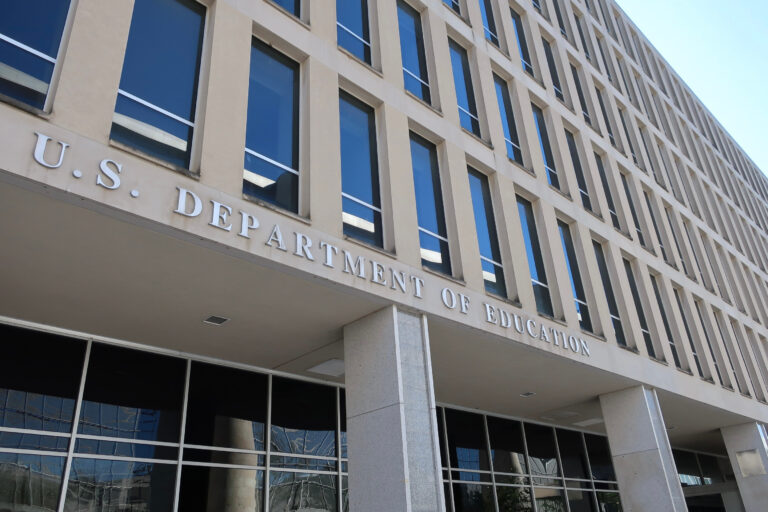
On December 4, the U.S Department of Education (ED) released an agenda and a discussion draft of proposed rules of its upcoming negotiated rulemaking (AKA, “Neg Reg”) session. The Accountability in Higher Education and Access Through Demand-driven Workforce Pell (AHEAD) Committee, set to meet this week, is one of the most highly-anticipated rulemaking sessions in recent memory.
The AHEAD committee is tasked with handling many of the higher education rules outlined in the One Big Beautiful Bill Act, including Workforce Pell as well as a new “do no harm” accountability metric requiring degree programs to lead to wages higher than for those with only a high school diploma. (ED will seek to tackle the latter in the next round of AHEAD’s negotiations that take place January 5-9, with many waiting to see how those rules will intersect with, or replace, the existing Biden-era Gainful Employment regulations that apply to for-profit and non-degree programs.)
The agenda and timeline is packed, and ED hopes the committee will reach consensus on the Workforce Pell provisions by December 12 ahead of the program’s launch on July 1, 2026. If consensus is not reached, ED will have significant discretion to craft the rules it seeks to finalize.
We’re watching the following potential rules for Workforce Pell based on the discussion draft:
- Could the 50% Rule Become the 25% Rule for Workforce Pell? With accreditor approval, institutions can currently partner with ineligible organizations’ to offer up to 50% of its academic program. The discussion draft seeks to limit this to 25% of the program for Workforce Pell.
- The Role of States. Governors play a critical role in approving Workforce Pell-eligible programs. The discussion draft requires governors to outline their process and criteria for approval, including a written policy around how they will determine whether a credential is stackable and portable.
- Accountability Metrics. The rules expand on the law’s requirement that Workforce Pell programs have 70% completion and placement rates.
- The draft would make states responsible for certifying completion/ placement rates in the first two years. Initially, placement rates would measure if students are employed in any job and then, beginning in the 2028-29 award year, require job placement to be defined as employment within “the occupation for which the program prepares students” or a “comparable,” in-demand occupation.
- The draft also creates a new “value-added earnings” metric requiring that program tuition be less than the difference between median earnings, adjusted by “state and metropolitan area regional price parities,” and 150% of the poverty line.
- Pell for Bachelor’s Degree Grads. The discussion draft would carve out an exception for bachelor’s degree recipients to be eligible for Workforce Pell as the law mandates, noting an example of students who may be seeking a state teaching certification even though they already have a bachelor’s degree.
- Remedial / Non-College Level Credit. The draft rules would confirm that non-credit remedial coursework would not count toward Workforce Pell.
- No Direct Assessment. While competencies are a critical component of Workforce Pell, ED notes in the discussion draft that the law is clear in requiring 150 clock hours, and therefore adds a rule that would prevent direct assessment competency-based education programs (which would decouple time from learning) from being eligible.
Our team will continue to track Workforce Pell closely. Questions? Get in touch.