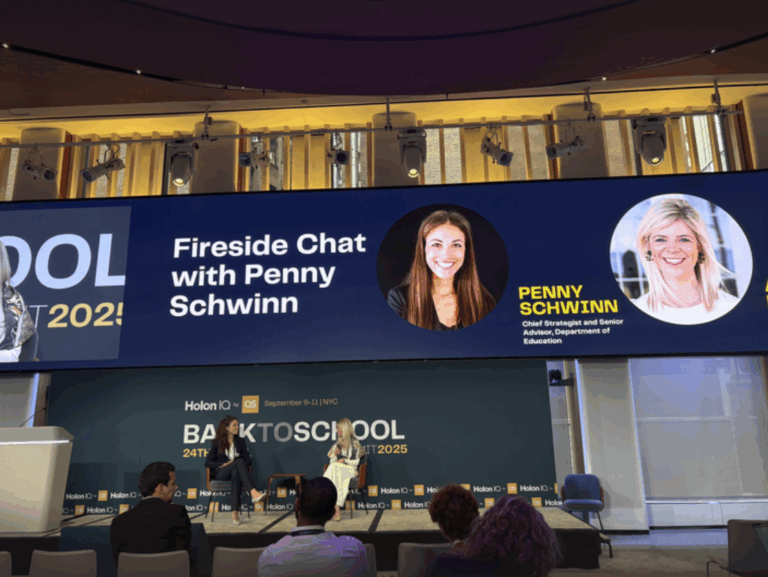
Each fall, HolonIQ’s Back to School Summit convenes education leaders from across the public and private sectors to take stock of the challenges and opportunities shaping the year ahead. From AI to chronic absenteeism to literacy, the Summit provides a valuable “pulse check” on whether policymakers, practitioners, and innovators are aligned on the issues that matter most for students.
This year, Whiteboard Advisors’ Anna Edwards joined the stage to interview Penny Schwinn, Chief Strategy Officer at the U.S. Department of Education. Their conversation ranged from adolescent literacy to workforce pathways to the role of AI in classrooms. What emerged was a candid look at how federal leaders are thinking about accountability, innovation, and the role of states in driving real change. Below are highlights from the conversation.
Q: After what could be described as a chaotic summer, what excites you most about the work ahead?
Penny: There’s tremendous opportunity right now to push for innovation and flexibility. At the top of the list is literacy, especially adolescent literacy. We’ve historically focused on early grades, but the latest NAEP results make clear that we must also support middle and high school students who have fallen behind. I’m also excited by the momentum around workforce development and the way states are stepping up as true leaders in shaping education policy.
Q: Having served as a state leader, yourself, what would have been on your “wish list” in terms of federal support?
Penny: States want room to serve their kids without being hamstrung by compliance. Too many federal dollars are eaten up by paperwork rather than classroom impact. While some oversight is essential, the balance is off. If states could redirect those resources into tutoring, CTE pathways, or literacy interventions, the return for students would be far greater.
Q: How is the Department approaching accountability and assessment?
Penny: The priority is maintaining high expectations. Lowering the bar doesn’t serve students, even when results are discouraging. At the same time, there’s interest in modernizing assessment—exploring options like through-year models that reduce test time and create space for more meaningful learning. The challenge is ensuring rigor while allowing states to tailor additional measures to their own contexts.
Q: The most recent NAEP results showed historic lows for 12th graders. What stood out to you, and how should we be thinking about high school redesign?
Penny: Unfortunately, the results were not surprising. Today’s seniors were middle schoolers during the pandemic, and the gaps we saw then have carried forward. Many missed key math and literacy support, and now they’re entering high school with different expectations for what learning should look like. They want engaging, relevant experiences—not rows of desks or hours on a screen. High schools must evolve with more career-connected pathways that blend rigor and relevance, helping students see clear links to their futures.
Q: How can states and districts better align education and workforce, including by leveraging funds like Perkins and WIOA?
Penny: Too often, education and labor operate in silos. States like Ohio and Indiana are showing what’s possible when you braid resources and tie graduation requirements directly to work-based learning. The federal government has a role to play in modeling collaboration across agencies and reducing red tape so local leaders can focus on building meaningful pathways to high-demand jobs.
Q: AI is on everyone’s mind. How is the Department thinking about its role in education?
Penny: We can’t afford 54 different state AI policies. There needs to be a baseline national framework for PreK–12. Beyond that, we have to shift the narrative from fear to opportunity. AI is not about replacing teachers—it’s a tool to accelerate learning, personalize support, and prepare students for the future workforce. Other countries are moving faster on this, and we risk falling behind if we don’t act decisively.